
Pool Barrier Compliance Melbourne
Pool & Spa Barrier Inspections and Form 23 Compliance Certificates
POOL & SPA SAFETY COMPLIANCE
Pool Barrier Inspection Melbourne & Form 23 Certification
BI&C provides pool barrier compliance inspections in Melbourne for residential swimming pools and spas. Our inspection service assesses the accessible pool or spa safety barrier against the applicable Victorian barrier requirements and helps property owners understand any compliance issues that require attention.
When a barrier satisfies the applicable requirements, an authorised registered practitioner can issue a Form 23 Certificate of Pool and Spa Barrier Compliance for the property owner to lodge with the relevant local council.
Victorian pool and spa owners are responsible for registering applicable pools and spas with their council, arranging periodic barrier inspections and lodging the required compliance certificate. The next certificate is generally required four years after the previous certificate.
Registered Inspection Professionals
Pool and spa barrier inspections are carried out within the scope permitted for appropriately registered practitioners.
Form 23 Compliance Certificate
Where the barrier complies with the applicable requirements, the appropriate compliance certificate can be issued for council lodgement.
Clear Compliance Findings
Inspection findings are explained clearly, helping property owners understand observed barrier compliance issues and any areas requiring attention.
Melbourne & Victoria Inspection Experience
BI&C provides pool and spa barrier inspection services across Melbourne and Victoria, with practical knowledge of local properties and compliance requirements.
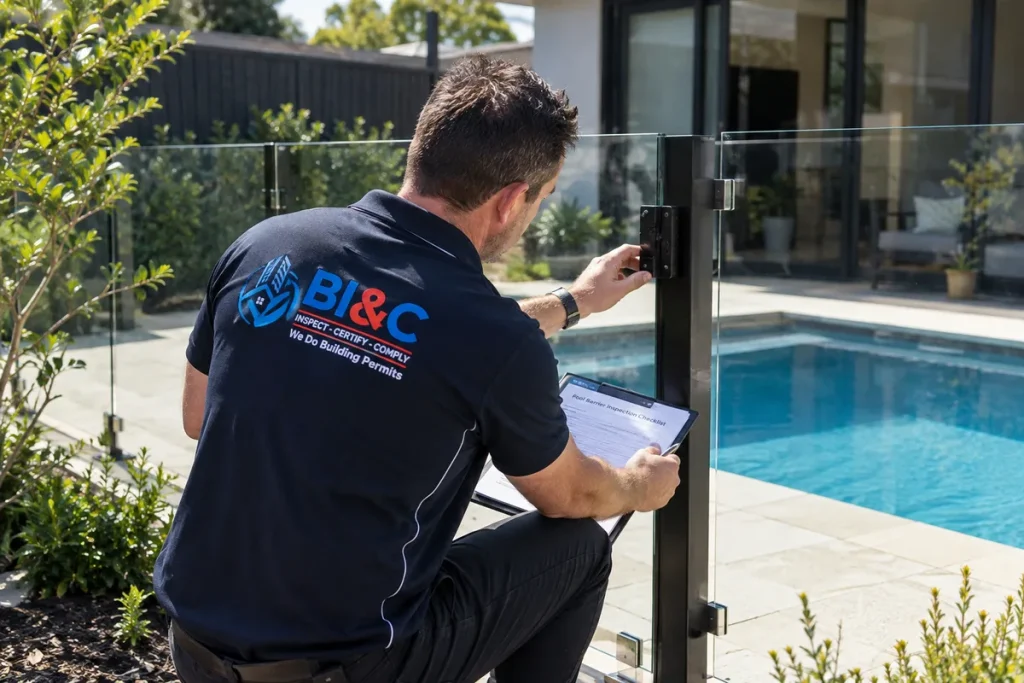
Pool Barrier Requirements Commonly Reviewed During an Inspection
A pool barrier compliance inspection in Melbourne reviews the accessible components of a swimming pool or spa safety barrier against the requirements applicable to the property. Depending on the barrier and its circumstances, the inspection may include gates and latches, barrier condition, gaps and openings, non-climbable areas, boundary barriers and relevant doors or windows.
Self-Closing & Self-Latching Gates
Accessible gates are reviewed for closing and latching operation and other applicable barrier requirements.
Barrier Height & Condition
Accessible sections of the pool or spa barrier are reviewed for condition and relevant dimensional requirements.
Gaps & Openings
Accessible openings beneath and through the barrier can be reviewed against the requirements applicable to the property.
Non-Climbable Areas
Accessible areas around the barrier are reviewed for objects, features or conditions that may affect required non-climbable zones.
Boundary Barriers
Where a boundary fence forms part of the pool barrier, its accessible condition and relevant barrier features can be assessed.
Doors, Windows & Surrounding Areas
Where relevant to the applicable barrier arrangement, accessible doors, windows and surrounding conditions can form part of the assessment.
Victorian Pool & Spa Barrier Compliance Process
Victorian pool and spa owners have ongoing safety-barrier responsibilities. Pools and spas covered by the Victorian requirements must be registered with the relevant local council, and the applicable barrier standard is determined according to the circumstances and construction date of the pool or spa. A suitably registered practitioner can inspect the barrier and determine whether it satisfies the applicable requirements.
Register Your Pool or Spa
Eligible swimming pools and spas must be registered with the relevant Victorian local council. Council records also identify the applicable barrier standard and certificate due date.
Arrange a Barrier Inspection
Arrange an inspection with a registered building surveyor, building inspector, pool inspector or municipal building surveyor authorised to perform the inspection.
Obtain & Lodge Form 23
When the barrier satisfies the applicable standard, the inspector can issue a Certificate of Pool and Spa Barrier Compliance (Form 23). The property owner must generally lodge the certificate with the relevant council within 30 days of issue.
Repeat Every Four Years
After the compliance certificate is lodged, council confirms when the next certificate is due. A new barrier compliance certificate is generally required every four years.
Official Victorian guidance: Pool and spa barrier requirements can vary according to the applicable barrier standard and individual property circumstances. Property owners should confirm their obligations with their relevant local council and refer to current Victorian pool and spa safety guidance before undertaking alterations or compliance work.
What Happens if a Pool Barrier Does Not Comply?
If a pool or spa barrier does not satisfy the applicable Victorian requirements at the time of inspection, the outcome depends on the nature of the non-compliance. Some issues may be able to be rectified within the permitted timeframe and reassessed, while certain circumstances may require a Certificate of Pool and Spa Barrier Non-Compliance to be issued and provided to the relevant council.
Compliance Issues Identified
The inspection identifies accessible barrier components that do not satisfy the applicable requirements, such as gate operation, barrier condition, gaps or other relevant safety-barrier issues.
Rectification & Reinspection
Where the regulations allow, identified issues may be rectified within the applicable timeframe before the barrier is inspected again.
Non-Compliance Certificate
Where required under the Victorian process, a Certificate of Pool and Spa Barrier Non-Compliance may be issued and provided to the relevant council.
Form 23 Pool & Spa Barrier Compliance Certificate
When a swimming pool or spa barrier satisfies the applicable requirements, the relevant building practitioner can issue a Certificate of Pool and Spa Barrier Compliance (Form 23). The property owner must then lodge the certificate with their local council within the applicable timeframe.
When Form 23 Is Issued
When the pool or spa barrier satisfies the applicable requirements, the appropriate building practitioner can issue the Certificate of Pool and Spa Barrier Compliance (Form 23).
Lodging Form 23 With Council
The property owner must lodge the issued compliance certificate with the relevant local council within the required timeframe. Council records the certificate and advises the next applicable compliance date.
Ongoing Barrier Compliance
Pool and spa barriers must continue to be maintained after certification. A new compliance certificate is generally required every four years in Victoria.
Who Can Inspect a Pool or Spa Barrier in Victoria?
Pool and spa barrier compliance inspections in Victoria must be carried out by an appropriately registered practitioner authorised to perform this work. The practitioner assesses the safety barrier against the applicable barrier standard recorded for the property and determines whether the barrier complies.
Registered Building Inspectors
Appropriately registered building inspectors can inspect swimming pool and spa safety barriers and determine whether they satisfy the applicable barrier standard.
Registered Building Inspector – Pool Safety
Practitioners registered for pool-safety inspection work can inspect existing pool and spa barriers and issue the appropriate compliance or non-compliance documentation.
Registered Building Surveyors
Registered building surveyors may also be authorised to undertake pool and spa barrier inspections and certification within the scope of their registration.
Check practitioner registration: Property owners can verify whether a practitioner is appropriately registered and authorised to perform pool and spa barrier inspection work through Victoria’s Building and Plumbing Commission practitioner information before arranging an inspection.
Book a Pool Barrier Compliance Inspection in Melbourne
Need your swimming pool or spa barrier inspected? BI&C provides pool barrier compliance inspections across Melbourne to help property owners understand whether their safety barrier meets the applicable Victorian requirements. Where the barrier complies, the appropriate Form 23 compliance certificate can be issued for lodgement with the relevant council.
Pool Barrier Compliance FAQs Melbourne
Find answers to common questions about pool barrier compliance inspections, Form 23 certificates, inspection requirements and swimming pool and spa safety barriers across Melbourne and Victoria.
How often does a pool barrier need to be inspected in Victoria?
In Victoria, once a swimming pool or spa is registered with the relevant local council, the council determines the applicable barrier standard and the date by which the first compliance certificate must be lodged. After a compliance certificate is lodged, a new Certificate of Pool and Spa Barrier Compliance is generally required every four years. Property owners should check the due date recorded by their local council.
What is a Form 23 pool barrier compliance certificate?
Form 23 is the prescribed Certificate of Pool and Spa Barrier Compliance used in Victoria. When an appropriately registered practitioner determines that a swimming pool or spa barrier complies with the applicable barrier standard, the certificate can be issued to the property owner. The owner must then lodge the certificate with the relevant local council within the required timeframe.
Who can inspect a pool or spa barrier in Victoria?
Pool and spa barrier inspections must be performed by an appropriately registered practitioner authorised for this work, such as an eligible building inspector or building surveyor. Registration should be checked before arranging an inspection.
What happens if my pool barrier does not comply?
If compliance issues are identified, the outcome depends on the nature of those issues. Some matters may be able to be rectified and reassessed within the applicable timeframe. In other circumstances, a Certificate of Pool and Spa Barrier Non-Compliance may be required.
What does a pool barrier compliance inspection check?
An inspection can review accessible gates and latches, barrier height and condition, gaps and openings, non-climbable areas, boundary barriers and relevant doors, windows or surrounding conditions against the requirements applicable to the property.
Do I need to register my swimming pool or spa with council?
Victorian requirements generally require applicable swimming pools and spas to be registered with the relevant local council. Council records also help determine the applicable barrier standard and certification due date.
How long do I have to lodge Form 23 with council?
Generally, lodge Form 23 with your council within 30 days of issue. A 14-day deadline applies to the certificate following barrier alterations that require a building permit. Check the applicable process with your council.
Can BI&C help if my pool barrier fails the first inspection?
BI&C can explain the accessible compliance issues identified during the inspection and the next steps applicable to the inspection outcome. Where permitted, the barrier can be reassessed after required rectification work has been completed.
Related Pool & Spa Compliance Services
Explore related BI&C services and guidance for swimming pool and spa barrier compliance, property inspections and Victorian building requirements.
Pre Purchase Inspection Melbourne
Buying a property? Understand accessible building defects, moisture concerns and maintenance issues before making your purchase decision.
Building Permit Melbourne
Building permit guidance for residential and commercial projects across Melbourne and Victoria.
Building Inspection FAQs Melbourne
Find answers about building inspections, permits, pre purchase inspections and property compliance.